
Post-transcriptional Mechanisms Instructing Brain Development and Function

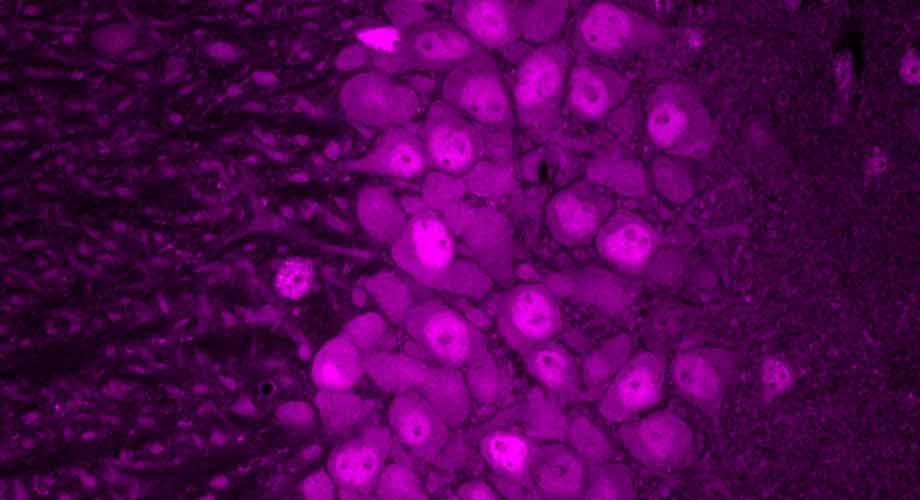
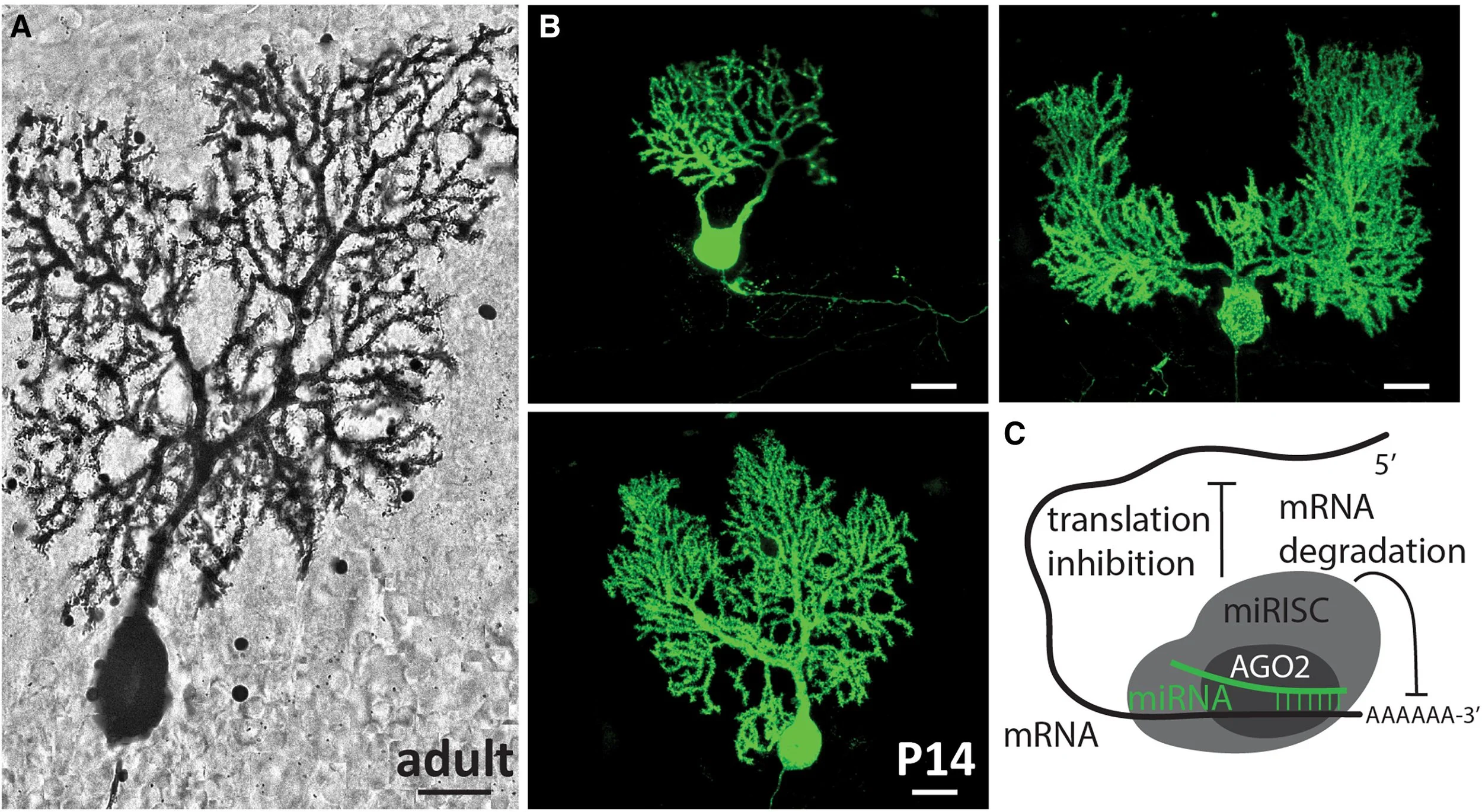
Increasingly larger brains require the assembly of neuronal networks composed of up to billions of neurons and trillions of connections, a gene expression problem of staggering complexity. After development is completed, due to their elaborate architecture, neuronal compartments must regulate protein production at time scales that often cannot rely on new transcription, because the nucleus is too far away. To overcome these unique challenges, neurons rely heavily on post-transcriptional mechanisms such as alternative splicing, RNA-binding proteins, and microRNAs, which, in concert, sculpt gene expression in time and space. The overarching goal of the Lippi lab research program is to understand how these post-transcriptional mechanisms instruct neuronal development, diversification (the emergence of different cell types), and function. Further, we aim to understand how these mechanisms fail at the onset of neuropsychiatric disorders or can be leveraged to correct disease states.
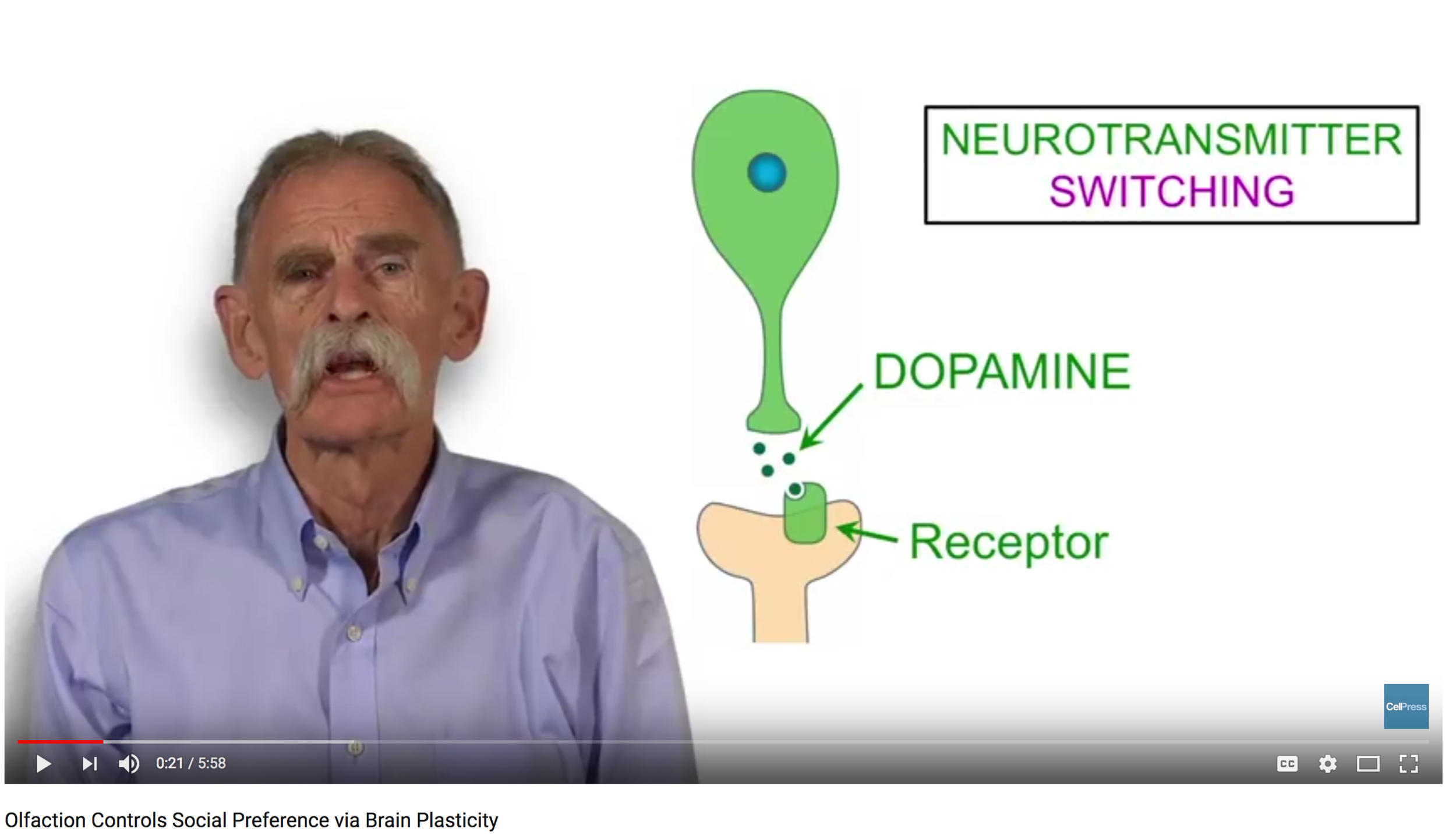
We discovered how microRNAs coordinate the formation of balanced neuronal networks regulating key developmental milestones (Lippi et al. Neuron 2016; Taylor et al. Elife 2023), and how this knowledge can be used to correct the trajectory to disease (Zolboot, Ghanem et al. in preparation). We made seminal contributions to our understanding of cell type-specific post-transcriptional mechanisms that drive neuronal identity (Dulcis*, Lippi* et al. Neuron 2017; Du et al. in review; Zampa*, Sievert* et al. in preparation) and the emergence of neuronal diversity (Zolboot*, Xiao* et al. Neuron 2025; Sison*, Zampa*, Kofman*, et al. Nature 2026). Finally, we proposed a shift in the way microRNA-target networks are dissected, focusing not on individual microRNAs but on the targets receiving strong and convergent microRNA regulation, an innovative approach that has been very fruitful in understanding why critical nodes of the network need tight spatiotemporal regulation of their expression levels (Zolboot*, Xiao* et al. Neuron 2025; Du et al. in review; Zampa, Sievert et al. in preparation).
News





Scripps Research is one of the world's largest private, non-profit research institutes. It stands at the forefront of biomedical sciences and houses the best medicinal chemistry in the world, the ideal set-up for translational research. TSRI has been named "the most influential research institute in the world", according to the 2017 Nature Innovation Index, which sheds light on the impact of academic research. The Lippi lab is at the Dorris Neuroscience Center, which hosts world-class laboratories with a focus on cellular and molecular neuroscience.
University of California, San Diego

The Neurosciences Graduate Program at the University of California, San Diego, together with five participating institutions, offers an outstanding opportunity for graduate training in one of the most highly interactive scientific environments available in the United States. UCSD graduate program is ranked fourth in the country by the National Research Council of the National Academy of Sciences.